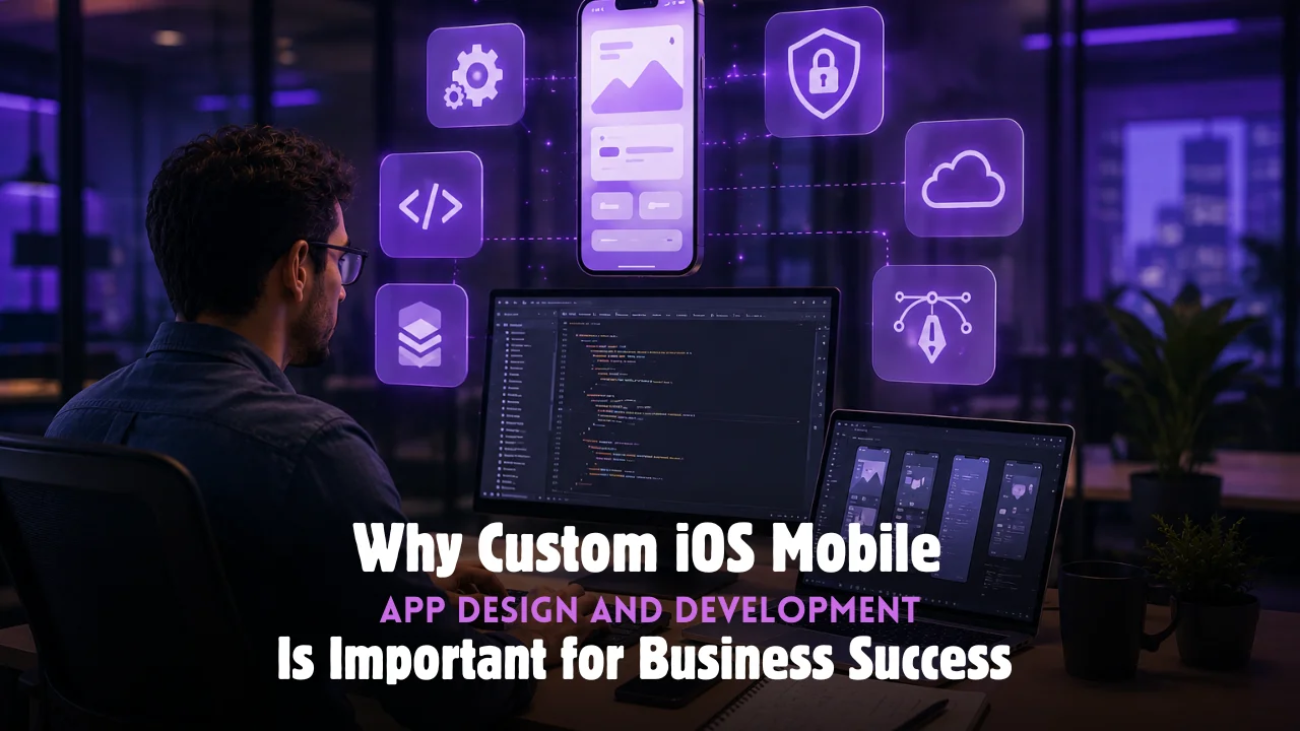
Here’s something most owners won’t say out loud. Customers judge the whole business by how the app feels in the first ten seconds. One laggy screen, one button hiding where nobody looks, and they’re gone, usually to a competitor who got it right. Custom iOS mobile app design and development is really about surviving those ten seconds. It’s a handshake, and iPhone users have no patience for a limp one.
What Custom iOS Mobile App Design and Development Really Means
“Custom” gets tossed around a lot, so let’s be blunt. A template makes your business bend to its rules. Want a checkout that skips a pointless step? Too bad, the template wants five. Custom iOS mobile app design and development is the opposite arrangement. The app bends to you. Most sharp businesses start with iOS app design services first, sketching screens and arguing about where the cart button belongs, long before anyone writes code. Sounds backwards. It isn’t. A gorgeous app nobody can navigate is just an expensive mistake wearing a nice logo.
Why Businesses Bet Big on iOS
There’s a reason companies pour budget into Apple first. iPhone owners spend more per purchase, and more often, and the App Store numbers have said so for years. But throwing an app at them with no mobile app strategy is like opening a shop with no sign. A real mobile app strategy answers the dull questions early. Who is this for? What one thing must it nail? Then good business mobile apps go quiet and useful. A nudge here, a saved payment detail there, the usual order remembered. That’s how business mobile apps turn a one-time buyer into someone who stops checking competitors. None of it happens by accident, which is the whole argument for custom iOS mobile app design and development.
Inside the iOS Application Development Process
Nobody talks about the messy middle of iOS application development, so here it is. It kicks off with a pile of questions, some annoying, all necessary. What problem are we solving, really? Then design takes the wheel, and this is where the app user experience gets decided, tap by tap. Get the app user experience wrong and no amount of clever code saves it. People just delete the thing. After that comes the build, where good app development solutions lean hard on Swift and Apple’s frameworks so the app doesn’t wheeze the second traffic spikes. And here’s the part clients hate hearing. iOS application development doesn’t stop at launch. The better app development solutions leave room for updates on purpose, because version one is always a little wrong. Always. Real iOS application development is the slow grind of making it less wrong every month.
Choosing the Right iOS App Development Tools
The tool question sounds nerdy, but it quietly decides your timeline and half the budget. Xcode is where iOS apps get built, full stop, paired with Swift, which is cleaner and safer than the old Objective-C days. TestFlight lets a handful of real people kick the tires before the public shows up, sparing you a pile of one-star reviews on launch day. Here’s the thing about iOS app development tools. Newer does not mean better. A team fluent in its iOS app development tools moves fast, because it isn’t googling basics at 2am. That fluency is what you’re paying for. Ask a studio which iOS app development tools they trust and why, then listen for a real answer, not a buzzword salad.
Custom Build or Template? When Each One Makes Sense
Not every idea needs a custom build, and pretending it does is how agencies overcharge. Testing a rough concept this quarter? A template is fine. Cheap, fast, disposable. But the second you’re handling real payments, customer data, or a workflow that’s genuinely your own, templates start snapping under the load. That’s the line. Template to prove the idea has legs. Custom once it clearly does. Dragging a cheap template past its limits usually costs more later than building it properly would have.
How Custom iOS Mobile App Design and Development Drives Business Success
So what does all this actually buy you? Fewer frantic support calls, for a start, since customers can sort themselves out at 11 pm without emailing a soul. Reorders climb, because buying again is two thumb taps instead of a hunt across your website. And that little icon on the home screen is free advertising every time someone unlocks their phone. What sets custom iOS mobile app design and development apart from a generic build is simple. Every win ties back to a goal you genuinely care about, not a feature list some developer thought looked impressive. Done right, custom iOS mobile app design and development stops being a line item and starts paying you back.
Frequently Asked Question
How much does custom iOS app development cost?
It depends on scope. Simple apps can run a few thousand, feature-heavy ones climb into five figures. More features, higher price.
How long does iOS application development take?
Usually three to six months for a solid first version, and it moves faster when your content, branding, and goals are sorted before the team starts.
Do design and development have to be separate?
Not really. Most studios fold ios app design services and the build into one process, so the people drawing the screens and the ones coding them actually talk.
Will one app run on both iPhone and iPad?
Yes, when it’s built thoughtfully. Good iOS application development plans for the whole Apple lineup, so one app stretches across iPhone and iPad without looking broken.
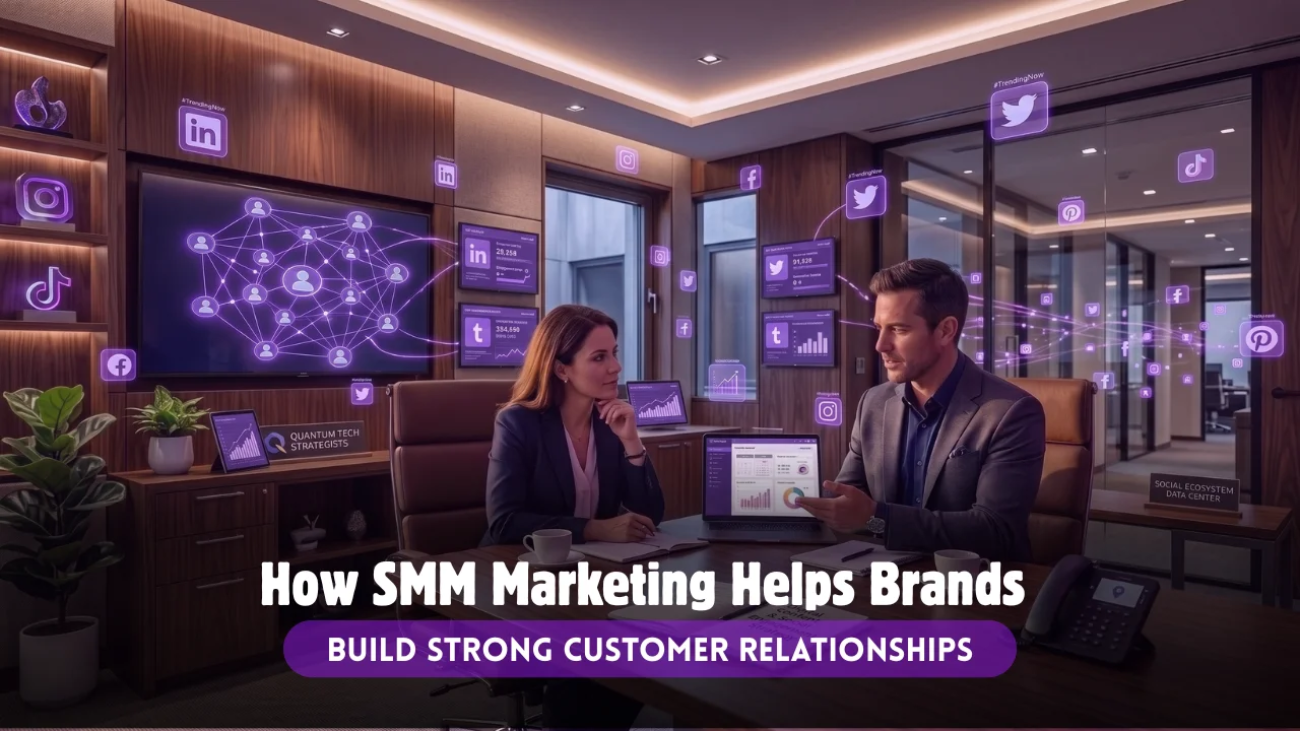
Most brands do not lose customers because the product is bad. They lose them by going quiet. Somebody follows the account, waits around for a reason to care, and never gets handed one. That gap is where SMM marketing actually lives. Not in the polished campaign everyone screenshots, but in the ordinary back-and-forth, day-to-day work that makes a company feel like it’s run by humans who are paying attention.
The Importance of Social Media Marketing for Modern Brands
Ask a shop owner where new customers come from lately, and the answer keeps landing in the same spot. A friend tagged them. A reel popped up mid-scroll. Someone looked the brand up and read the comments before anything else. The importance of social media marketing sits right there, in all that quiet snooping that people do long before they ever click buy. This is where a professional Social Media Marketing Agency helps brands build visibility, create meaningful connections, and turn everyday online interactions into potential customer relationships.
Brand awareness used to cost a small fortune. A billboard, a radio slot, a full page nobody asked for. These days a nail salon builds steady brand awareness by posting in the same corner of its studio every morning, and the whole operation runs on a phone and ten spare minutes.
Pay attention! An okay post that actually goes out every day does more than a great one stuck forever in the drafts folder.
How SMM Marketing Turns Followers Into Real Relationships
There’s a massive amount of difference between a fan and a follower. That said, your follower may not exactly be a fan. Someone taps follow, then never thinks about the brand again unless something pulls them back. SMM marketing is the slow, unshowy job of closing that gap.
Community management is where it happens, and it is far less glamorous than the phrase makes it sound. It means catching the comment where a customer is quietly annoyed and sorting it before it turns into a thread. It means clocking the regular who orders every Friday. A tiny candle brand whose owner answers every message herself, typos and all, ends up with warmer community management than a corporation running a team off a script. People can tell when a reply came from an actual person.
The importance of social media marketing shows up more prominently during a public complaint. That’s a situation where there’s a comment that sounds rather grumpy. Here’s where things get interesting for you, not just the audience. Everyone waits to see whether the brand hides or handles it. If you handle it, there you have it!
Building Trust Through Social Media Brand Marketing
Nobody trusts a brand after a single good post. Trust piles up slowly, across dozens of posts that somehow all feel like family. Social media brand marketing is the work of keeping that thread unbroken, so a Tuesday post and a Saturday post clearly come from the same place.
That steadiness needs a content strategy holding it up, or the feed turns into a scrapbook of whatever the intern felt like that week. A content strategy settles the basics. What gets talked about, how often, in what tone. The Tech Designers, for one, tend to rough out a calendar first and hang each post on a real moment, whether that is a launch or just a slow stretch nobody planned around.
Get social media branding and marketing right and a scroller recognizes the brand before the caption even loads. Get social media brand marketing wrong, and the feed reads like three separate companies borrowing the same logo.
Not Every Platform Deserves Equal Effort
Spreading thin across every app is a classic way to lose a year. LinkedIn likes slower, more serious posts and quietly pulls in business clients. Instagram and TikTok run on faces and quick clips, which suits anything people enjoy looking at. X rewards speed and a thick skin. Picking two or three and running them properly beats juggling six of them badly, every time.
Pointer: fewer accounts, done well, will outlast a pile of half-abandoned ones without much of a contest.
A coupon buys one sale. It does not buy customer loyalty. What keeps someone coming back is the quiet sense that the brand actually knows they exist. SMM marketing, kept up over time, manages that by staying useful and human between purchases instead of only shouting during a sale.
The reward lands twice. A loyal customer buys again, then does the brand a favor no ad budget could cover. They mention it to friends. They stick up for the company when some stranger trashes it online. That kind of customer loyalty, earned through months of patient social media branding and marketing, tends to outlast whatever the competition is currently paying to rent attention.
Quick tip: thank the regulars where everyone can see it. A bit of public appreciation goes further than yet another discount code.
Frequently Asked Question
What is SMM marketing and why is it important for brands?
SMM marketing helps brands promote products, engage audiences, increase visibility, and build stronger customer relationships through social platforms.
How does social media marketing help businesses grow?
Social media marketing helps businesses reach new customers, improve brand awareness, and create meaningful connections with their target audience.
How does SMM marketing build customer loyalty?
SMM marketing builds customer loyalty through consistent content, personalized interactions, quick responses, and authentic brand communication.
Why is social media marketing important for modern brands?
Social media marketing is important because customers discover, research, and trust brands through online interactions before purchasing.
What role does community management play in social media marketing?
Community management helps brands handle conversations, answer customer questions, and create a loyal online community.
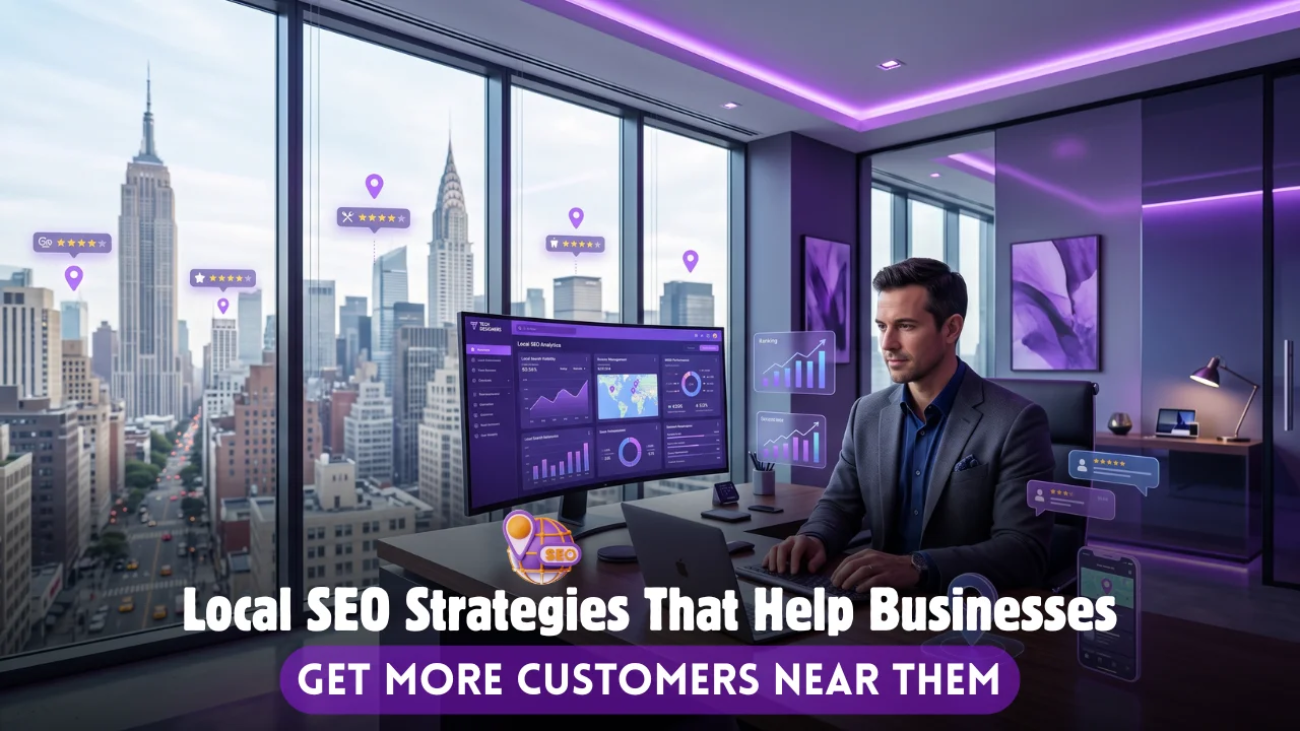
Most people never scroll past the first few local results. They tap one and call it. Show up when someone nearby is ready to buy, or lose them to the shop two streets over. Here are the local SEO strategies that bring those customers in.
Understanding Local SEO Before Building a Strategy
Before applying any local SEO strategies, it’s important to understand how local search works. Knowing the basics helps you make smarter decisions and attract nearby customers. A trusted Search Engine Optimization company can also guide you in building a strategy that delivers long-term local visibility and consistent business growth.
What Is Local SEO?
Local SEO gets your business found by people searching nearby, like “dentist near me” or “plumber in NYC.” You compete for your own patch of the map, not the whole internet. Good local businesses put your name and reviews before ready buyers.
How Google’s Local Search Algorithm Works
Google weighs three signals: relevance, distance, and prominence. How well you match, how close you are, how trusted you seem. Strong local search optimization feeds all three, keeping details accurate and reviews fresh.
Local SEO vs Traditional SEO
Traditional SEO chases rankings across the whole web. Local SEO narrows the fight to a city or neighborhood. A local searcher wants something now and nearby, not a company three time zones away.
Who Needs Local SEO the Most?
Any business tied to a physical area depends on this: restaurants, clinics, salons, gyms, repair shops. Many owners hand it to local search engine optimization services because the day job already eats every hour.
Top Local SEO Strategies to Get More Nearby Customers
This is where theory turns into work. These local seo strategies pull in nearby customers, in order.
1 Optimize Your Google Business Profile
Your Google Business Profile is the biggest lever. It shows your hours, photos, and reviews when someone searches you. Fill every field with real photos, the right category, and a weekly post. A neglected one tells Google you’ve stopped caring.
2 Use Consistent NAP (Name, Address, Phone Number)
Google wants your name, address, and phone number identical everywhere. One listing saying Street and another saying St. makes the algorithm hesitate, and that costs you. Fix every mismatch across your site, profile, and directories.
3 Target Local Keywords
People search in plain language, like “best coffee shop near me” or “general contractor NYC.” Good local search optimization means using those exact phrases in your copy. Watch near me searches especially, since they signal someone ready to act now.
4 Create Location-Specific Landing Pages
Serving several areas? One generic page won’t cut it. Build a specific page per neighborhood, naming landmarks a resident would know. These pages tell Google exactly where you operate.
5 Collect and Manage Customer Reviews
Reviews shape rankings and trust. Ask every happy customer with a two-tap link, and reply to all of them. Fresh, honest reviews lift your local rankings and win new customers.
6 Build Local Citations
Citations are mentions of your business on sites like Yelp, Apple Maps, and directories. Each accurate one is a vote of confidence to Google. Mismatched citations hurt more than none, so claim the big ones and keep details identical.
7 Improve Website Speed
A slow site loses people before it ranks. Most local searches happen on phones over patchy data, so every second counts. Compress images, cut heavy plugins, and get solid hosting. Over three seconds and visitors bounce to a competitor.
8 Add Local Business Schema Markup
Schema markup hands your details straight to search engines, labeling your name, hours, and reviews so Google isn’t guessing. Local Business schema earns rich results. If code isn’t your thing, local search engine optimization services can add it.
How Customers Actually Find Local Businesses Today
Ranking makes more sense once you know where people look. The local seo strategies above target four spots.
Google Maps Searches Many people open Maps and search there, wanting directions, hours, and a quick read on whether you’re worth the trip. A complete, well-reviewed listing wins here, pulled from your Google Business Profile.
Google Local Pack (Map Pack) The Local Pack is the boxed trio of businesses with a map near the top of results. Landing there is prime real estate, since most clicks stop there. Reviews, proximity, and an accurate profile get you in.
Organic Local Search Results Below the map sit the regular blue links, and they still matter. This is where your location pages and on-page local search optimization earn their keep. Useful, specific pages win the click.
Voice Search Queries More people just ask out loud: “Hey Google, coffee shop nearby.” Voice results lean on near me searches and short answers. Conversational phrasing and a tidy profile help you show up.
Final Thoughts
None of these local seo strategies are complicated alone. The hard part is doing them consistently while running the business. Start with the profile, fix your citations, and ask for reviews this week. If your plate is full, local business seo help or reputable local search engine optimization services can carry the load, and better local rankings follow.
Frequently Asked Question
How long does Local SEO take to show results?
Most businesses see movement in two to three months, with stronger rankings over about six months.
Is Google Business Profile enough for Local SEO?
It’s the foundation, not the whole house. Reviews, citations, and a fast site still matter to outrank rivals.
How many reviews should a business have?
There’s no magic number. Aim to beat the top competitors in your area, and keep new ones coming.
Can I rank in multiple cities?
Yes, with a dedicated landing page per city and consistent citations confirming you serve those areas.
What is the biggest local ranking factor?
Your Google Business Profile and proximity carry the most weight, then your reviews.
How often should I update my Google Business Profile?
Post weekly and refresh photos monthly, so Google reads your profile as active.
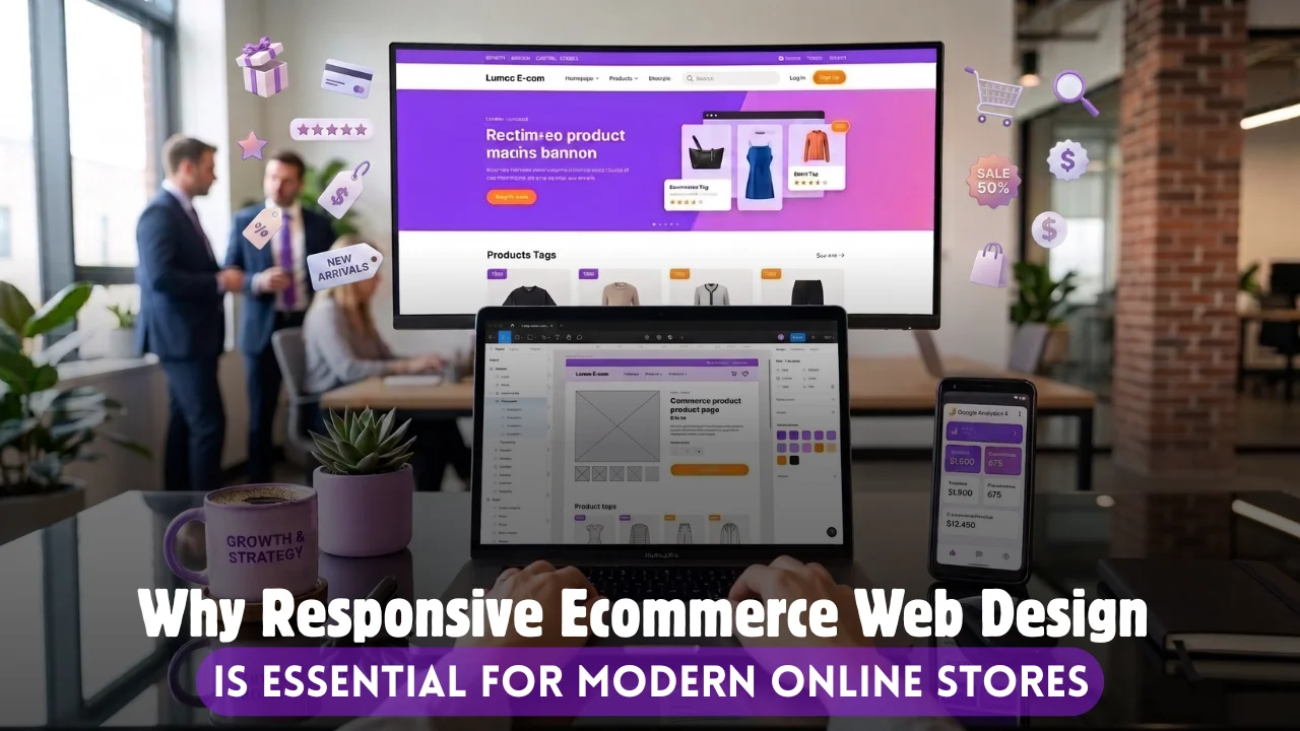
In today’s digital marketplace, your online store’s success hinges on one critical factor: how well it performs across every device. A professional ecommerce web page design is no longer a luxury, it’s the foundation upon which customer trust, search visibility, and revenue are built.
Mobile commerce now accounts for about 60% of retail ecommerce worldwide, and that share is expected to reach 63% by 2028. Meanwhile, 42% of consumers abandon a site if it doesn’t work properly on their device. These numbers reveal a simple truth: if your online store isn’t responsive, you’re turning away nearly half your potential customers.
For businesses seeking Ecommerce Web Design Services, the question isn’t whether to invest in responsive design. It’s how quickly you can implement it before your competitors capture the mobile audience you’re losing.
What Makes Ecommerce Web Page Design Responsive?
Responsive web design is a technical approach where your website’s layout automatically adjusts based on the screen size of the device being used. A desktop site with a full navigation bar and multi-column product grid might switch to a stacked layout with a hamburger menu on smaller screens. When you load a site on your phone and the layout adjusts perfectly without requiring you to zoom or struggle with tiny buttons that’s responsive design in action.
This is achieved through flexible layouts, scalable elements, and breakpoints specific screen widths that trigger structural changes. A four-column product grid may convert into a two-column grid, or a wide navigation menu may collapse into a hamburger icon.
Common Screen Resolutions for Ecommerce Design
Understanding your audience’s devices helps you optimize effectively:
Device Type
Common Breakpoint Range
Most Common Resolutions
Mobile
Around 500 pixels
360-414px wide
Tablet
768-850 pixels
768 × 1024, 800 × 1280, 820 × 1180
Desktop
1280+ pixels
1920 × 1080 (8% traffic), 1536 × 864 (4% traffic)
Data compiled from Shopify’s 2026 screen size guide
Why Responsive Design Is Non-Negotiable for Ecommerce
1. Google Rewards Mobile-First Experiences
Since implementing mobile-first indexing, Google primarily evaluates the mobile version of your site for ranking and indexing. Content hidden or missing on mobile screen sizes may not contribute to search visibility. This means your Ecommerce Web Design Solutions must prioritize mobile experiences first not as an afterthought.
Furthermore, Core Web Vitals including Largest Contentful Paint (LCP), Interaction to Next Paint (INP), and Cumulative Layout Shift (CLS) are confirmed by Google as direct ranking signals. These metrics measure user experience, and poor performance directly harms your search rankings.
2. Speed Directly Impacts Revenue
Speed is a design problem, not just a technical one. Page weight is planned before developers write any code. Large hero images, overloaded product cards, third-party widgets, and heavy animations all affect loading times.
Research from Google and Deloitte found that a 0.1-second improvement in mobile speed increased retail conversion rates by 8.4%, while retail users spent 9.2% more on mobile.
Portent’s ecommerce speed study revealed even more dramatic numbers:
Sites loading in 1 second had conversion rates 2.5 times higher than sites loading in 5 seconds
Ecommerce conversion rate fell from 3.05% at 1-second load time to just 0.67% at 4-second load time
3. Mobile Users Convert Differently
While mobile traffic now dominates, desktop conversion rates remain 74% higher than mobile. This gap isn’t inevitable it’s a design problem. Responsive ecommerce web design addresses this by:
Creating thumb-friendly tap targets
Simplifying checkout forms
Displaying trust signals prominently
Implementing sticky add-to-cart buttons
4. Cart Abandonment Is a Design Issue
The average documented cart abandonment rate sits at 70.22%. Baymard’s research found that large ecommerce sites can gain 35.26% in conversion rate through better checkout design, representing $260 billion in recoverable orders across the U.S. and EU.
What drives abandonment? According to Baymard’s quantitative research:
39% cited extra costs too high (shipping, tax, fees)
21% said delivery was too slow
19% didn’t trust the site with card information
19% were forced to create an account
18% found checkout too long or complicated
14% couldn’t see total costs upfront
Nearly every one of these reasons is solvable through better responsive design.
What Professional Ecommerce Web Design Services Include?
A comprehensive responsive web design ecommerce project goes far beyond aesthetics. According to industry experts, here’s what a professional agency delivers:
UX Planning & Strategy
Before any design begins, professional services research your target audience, analyze competitors, and map customer journeys. The output is a strategic blueprint wireframes and site architecture, that guides every design decision.
Mobile-First Development
Building for mobile first ensures thumb-friendly navigation, fast-loading pages, and checkout experiences designed for on-the-go purchases. Desktop layouts adapted downward usually keep too much content, too many choices, and too many form fields.
Performance Optimization
Speed is planned from the start. This includes image compression, code minification, proper caching, and careful selection of third-party integrations that won’t bloat your store.
Checkout Flow Design
Checkout should remove friction after the buyer decides to purchase. This means visible total costs, guest checkout options, payment trust signals, and clear form labels that work with autofill.
Post-Launch Support
Launching is just the beginning. Ongoing conversion rate optimization (CRO) involves testing, measuring, and refining based on real customer behavior. A strong Ecommerce Web Design Agency offers post-launch support including analytics monitoring and A/B testing.
Shopify Ecommerce Web Design: A Special Case
Shopify powers roughly 30% of the U.S. e-commerce platform market. For businesses using Shopify, responsive design takes on additional considerations.
Custom vs. Template-Based Design
Many agencies install a premium theme, swap in your colors, and call it done. This approach has limitations:
Generic layouts shared by thousands of stores
Restricted customization options
Themes that contain unnecessary code that can slow down the site
Custom Shopify ecommerce web design from a professional agency offers:
Unique design that fully represents your brand
Complete control over layouts, features, and logic
Better performance and cleaner code
Easier scalability as you can analyze customer behavior and make data-driven UX improvements
When to Invest in Custom
Theme-based stores work well for smaller businesses just getting started or working with tight budgets and timelines. However, a custom build is a superior investment for established brands that have specific ideas and a clear vision. This approach gives you the flexibility to create a unique online presence that truly reflects your brand identity. For businesses ready to scale, partnering with a digital marketing consultant can ensure your custom design is perfectly aligned with a strategy to maximize conversions and revenue.
Key UX Patterns That Drive Conversions
Ecommerce Web Design Solutions that convert focus on removing friction. Here are the highest-impact areas:
Product Discovery
Navigation must follow how buyers search and compare products. A fashion store needs size, fit, color, and material filters; a parts store needs compatibility, model, and specification filters.
Effective discovery patterns include:
Search with typo tolerance and relevant suggestions
Filters based on buying criteria (not internal catalog fields)
Product cards showing price, availability, rating, and delivery signal
Zero-result pages with corrected queries and alternative suggestions
Product Detail Pages
Good product pages’ act like helpful sales associates, they anticipate questions about fit, materials, compatibility, and shipping. Clear, scan able structure beats dense prose. Bullet lists, icons for care instructions, and short videos help shoppers make confident decisions.
Trust Signals
Trust has become the new currency of ecommerce. Transparent pricing, predictable system behavior, secure payments, and clear error communication form the backbone of modern UX/UI design.
How to Evaluate a Responsive Web Design Ecommerce Partner?
When selecting an Ecommerce Web Design Agency, look for:
Proven ecommerce experience with a portfolio of live stores
Mobile-first approach demonstrated in their work
Performance planning with Core Web Vitals targets
Conversion-focused methodology backed by case studies showing measurable improvements
In-house development (not outsourced) to ensure accountability
A capable partner will explain how revenue goals become interface decisions, and they’ll have a clear working process across discovery, UX design, performance planning, measurement, and commercial follow-up.
Conclusion: The Competitive Advantage of Responsive Design
In 2026, online stores no longer compete only on price or delivery speed, they compete on how intuitively they guide users through every stage of the purchasing journey. Responsive ecommerce web design is not just about making your site look good on mobile; it’s about engineering an experience that converts visitors into customers and builds long-term loyalty.
Ecommerce Web Design Services that prioritize performance, mobile behavior, and frictionless checkout don’t just improve user experience, they directly impact your bottom line. From higher conversion rates to better search rankings and reduced cart abandonment, the ROI of responsive design compounds over time.
If you’re ready to transform your online store into a revenue-generating machine, explore how professional Shopify ecommerce web design and custom ecommerce web page design can help you capture the mobile audience your competitors are losing.Ready to build a responsive store that converts? The Tech Designers specializes in custom Ecommerce Web Design Solutions tailored to your brand and business goals. Get a Free Consultation