
Three seconds and that’s all. That’s about how long a visitor gives a page before the back button starts to look tempting.
Nobody phrases it that way, of course. They just feel a site dragging, a button that doesn’t answer, a layout that hops the second they go to tap. Then they leave. And they almost never blame the load time out loud. They simply don’t return.
Google clocked this pattern years ago and built a way to measure it. Those measurements are the Core Web Vitals, and they feed straight into rankings now. So a slow site loses twice over, once with the irritated visitor and again in search results.
The Tech Designers spends a good chunk of its time on this exact problem, hauling heavy sites back to something quick. The encouraging part is that Core Web Vitals optimization is fixable, and most of the wins are far less exotic than the names make them sound.
What Core Web Vitals actually measure
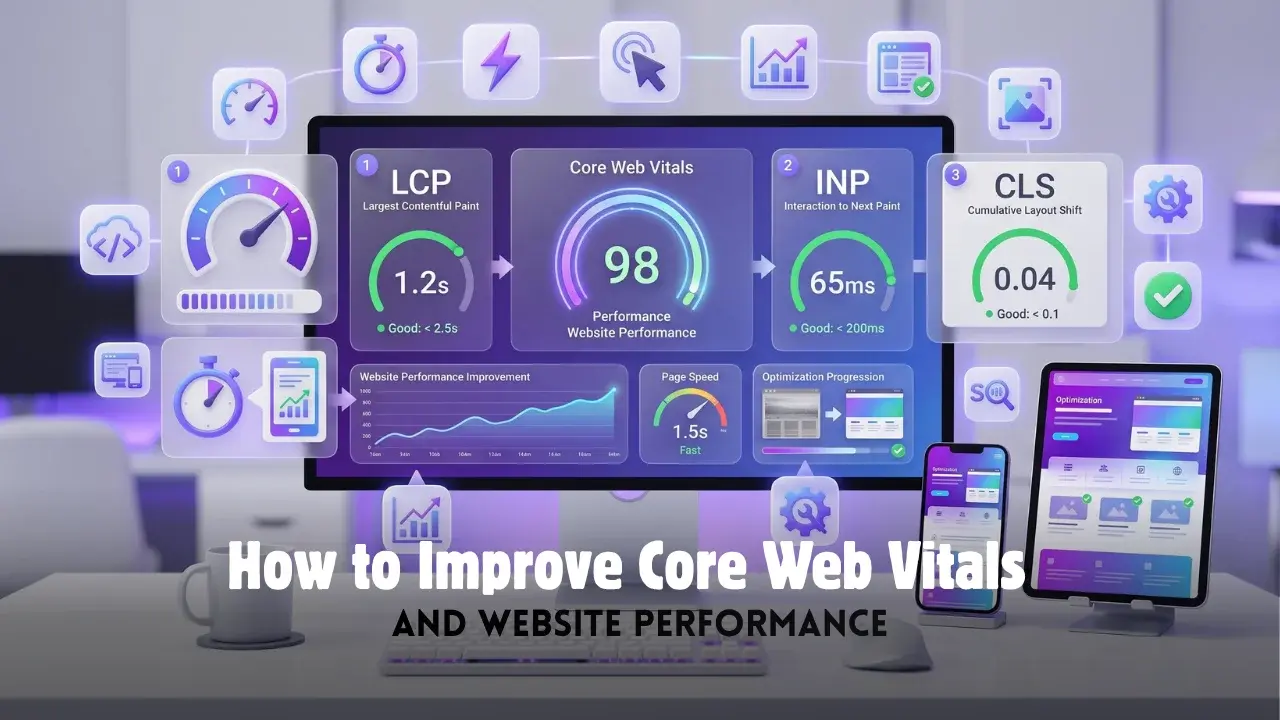
Cut the jargon and three plain questions sit underneath.
Does the page show up fast. Does it react when tapped. Does it hold still while it loads. Each one has a metric, and each metric has an awkward official name.
- LCP, timing how long the main content takes to appear
- INP, measuring how quickly the page answers a tap or click
- CLS, tracking how much the layout lurches around unexpectedly
Nail all three and a page feels quick and solid. Miss them and it feels wrong, even to someone who couldn’t tell you why. Real Core Web Vitals optimization means chasing every one of them, not just the easy one.
A Practical Approach To Core Web Vitals Optimization
Core Web Vitals optimization usually starts with load time, because that’s where the biggest and most visible wins tend to live.
Where The Weight Hides
The first metric almost always comes down to bulk. Something heavy is holding the page hostage while everything else waits.
Nine times in ten, it’s an image. A photo saved at full camera resolution, dropped onto the page, quietly outweighing the rest of the site put together. Largest Contentful Paint optimization often starts and ends with getting those under control.
- compress images and serve them in modern formats like WebP
- size them for where they actually display, not their original dimensions
- lazy-load anything below the fold so the top of the page appears first
The Invisible Drag
Then comes the code no visitor ever sees. Bloated scripts, a pile of tracking tags, a theme loading features the site doesn’t use.
This is where website performance optimization gets less glamorous and a lot more effective. Trimming dead code, deferring scripts, and cutting third-party clutter usually shifts Largest Contentful Paint optimization further than any single image swap. Steady page speed optimization here quietly lifts everything else on the page along with it.
Where Website Performance Optimization Makes The Biggest Difference
A page can load fast and still feel broken if it ignores the first tap or shudders as it settles.
Responsiveness is the INP side of the equation. When a page takes a beat to react, heavy scripts are usually hogging the browser at exactly the wrong moment. Interaction to Next Paint optimization means chopping that work into smaller pieces, so a tap gets answered at once instead of waiting in line behind a script.
Then there’s the jump. An ad that loads late and shoves everything down. An image with no space reserved for it. A button that slides the instant a thumb lands, so the tap hits the wrong thing entirely.
Cumulative Layout Shift optimization stops that by holding room ahead of time:
- set explicit width and height on every image and video
- reserve space for ads and embeds before they load in
- stop fonts swapping in a way that reflows the whole block of text
Get Interaction to Next Paint optimization and Cumulative Layout Shift optimization working together and the page stops fighting the person trying to use it. That combination is where Core Web Vitals optimization pays off on both fronts, feel and function.
Why Core Web Vitals Seo Is Worth The Effort
None of this is polishing for its own sake. Speed and rankings are knotted together now, tighter than they were a few years back.
Core Web Vitals SEO rests on a simple idea. Google would rather point searchers at pages that don’t annoy them. So when two sites sit close on everything else, the faster, steadier one tends to nose ahead.
There’s a second payoff with nothing to do with search. A quick site converts better, plainly. Good Core Web Vitals SEO and strong sales usually travel as a pair, since the same smoothness that pleases the algorithm keeps a buyer sliding toward checkout.
It also slots into the wider picture. Clean code, fast loads, and a tidy structure all pull the same way, and Core Web Vitals SEO is really just the performance corner of solid technical SEO. Handled well, it strengthens the rest of a site’s technical SEO instead of competing with it.
Making Core Web Vitals Optimization Stick
Measure, Don’t Guess
Nobody fixes what they can’t see. The whole job begins with real numbers.
Tools like PageSpeed Insights and Search Console show where a site stands and which pages drag it down. Serious website performance optimization runs off those readings, not off a vague sense of what feels sluggish.
Speed Is Not A One-Off
Here’s the trap most people walk into. A site tuned up today slowly drifts back.
New plugins add weight. Fresh posts bring heavy images. A tracking tag sneaks in for one campaign and never leaves. Ongoing website performance optimization keeps the site honest, and the occasional round of page speed optimization stops that slow creep from unpicking months of work. Lasting Core Web Vitals optimization is a habit, not a single good afternoon.
Frequently Asked Questions
What are Core Web Vitals?
Three Google metrics measuring a page’s loading speed, responsiveness, and visual stability.
Do Core Web Vitals affect SEO?
Yes, they are a ranking factor, so stronger scores can help a page compete in search.
What is a good LCP score?
Under 2.5 seconds is considered good for how fast the main content loads.
Can Core Web Vitals be improved without a developer?
Basics like image compression, yes; deeper code fixes usually need one.
How often should performance be checked?
Monthly is sensible, since new content and plugins quietly drag speed back down.